

MYTHBUSTING
There are many myths about women’s ordination. We’re here to bust them.
Here are some common misconceptions you will hear against women’s ordination, and how to respond.
Watch our video series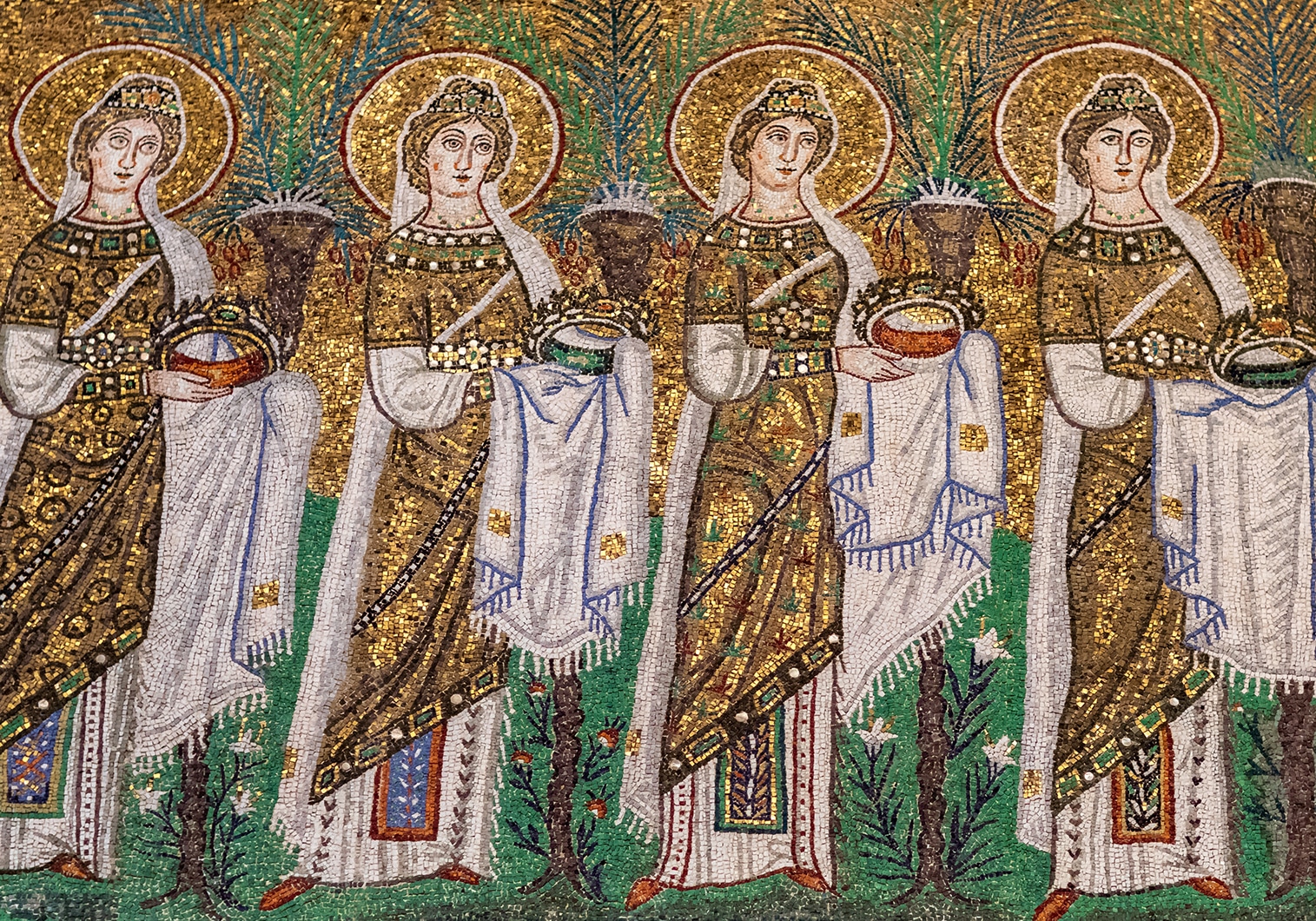

*Myth*
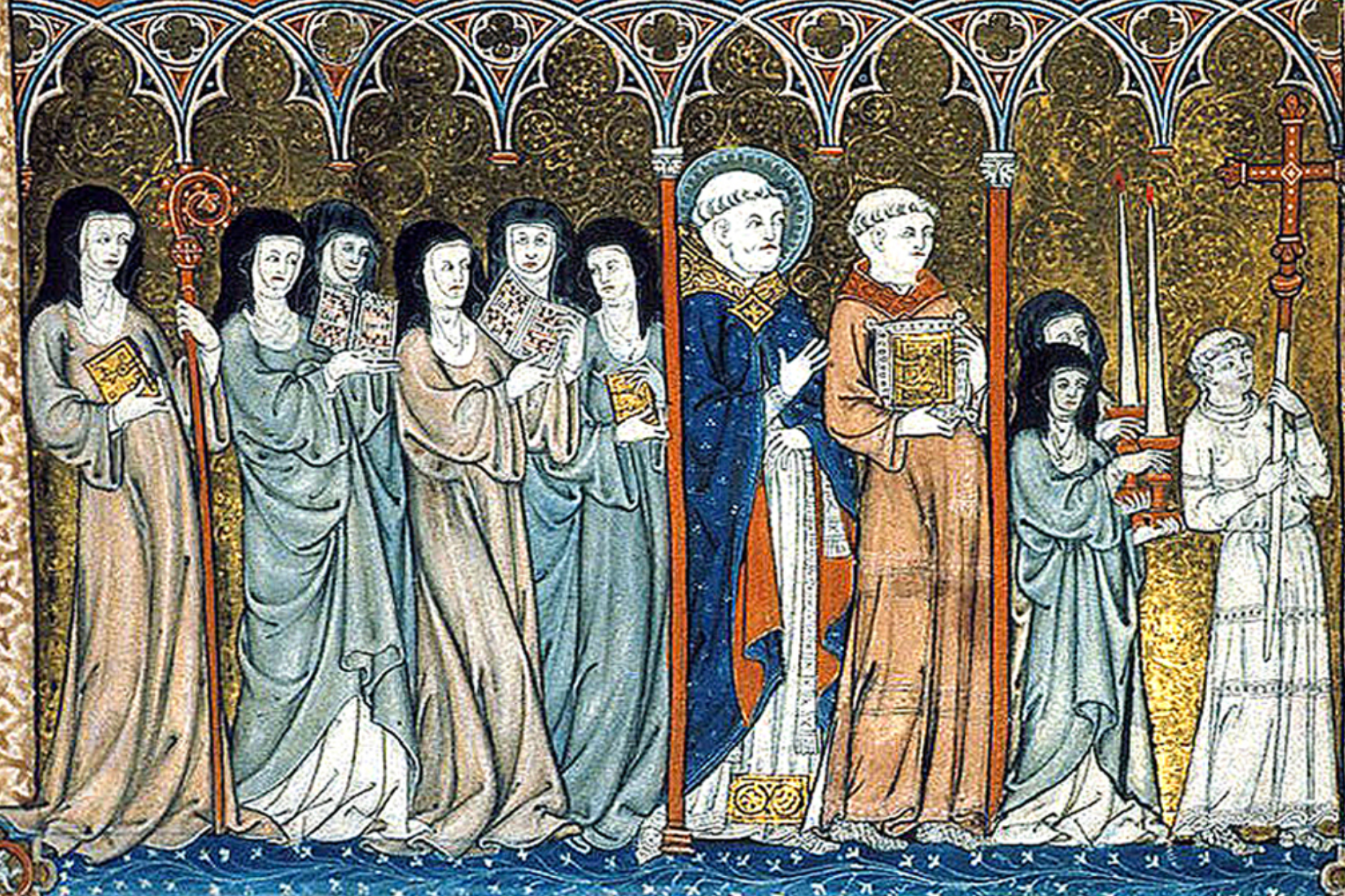
“The Church has never ordained women. It goes against 2000 years of unbroken tradition.”
*Myth*
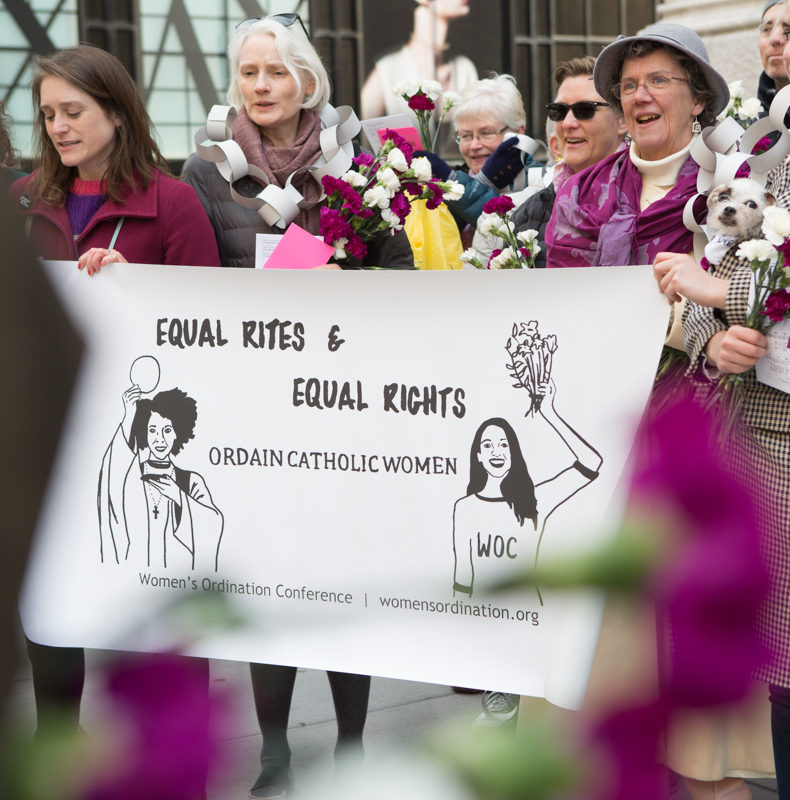
“Women’s ordination is not about ‘equal rights’ – no one has a ‘right’ to be a priest.”

*Myth*
“Jesus was a man, and priests act ‘in persona Christi,’ so only men can be priests.”

*Myth*
Christ is the bridegroom of the Church, his bride, so priests must be men because the Church is a bride.”
Nuestra serie cazadores de mitos está disponible en español aquí.
Cazadores de mitos*MYTH*
“Women’s ordination is not about ‘equality’ or ‘equal rights.’
No one has a ‘right’ to be a priest.”
Ordination to the priesthood is about a calling —about listening to the voice of God in our innermost being and responding to the invitation to love and serve one another. God does not limit our call on the basis of gender; people of all genders may discern and respond to a valid call to be a priest.
But the Church has attempted to restrict people’s ability to answer God’s call simply on the basis of their biological features. It is wrong for the hierarchy to attempt to put limits on God’s will.
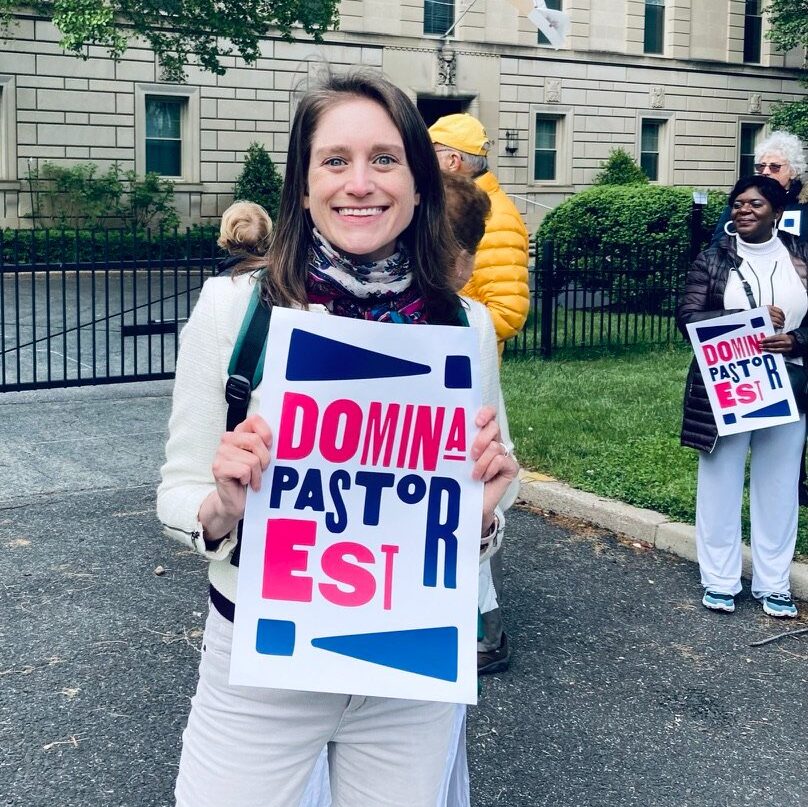
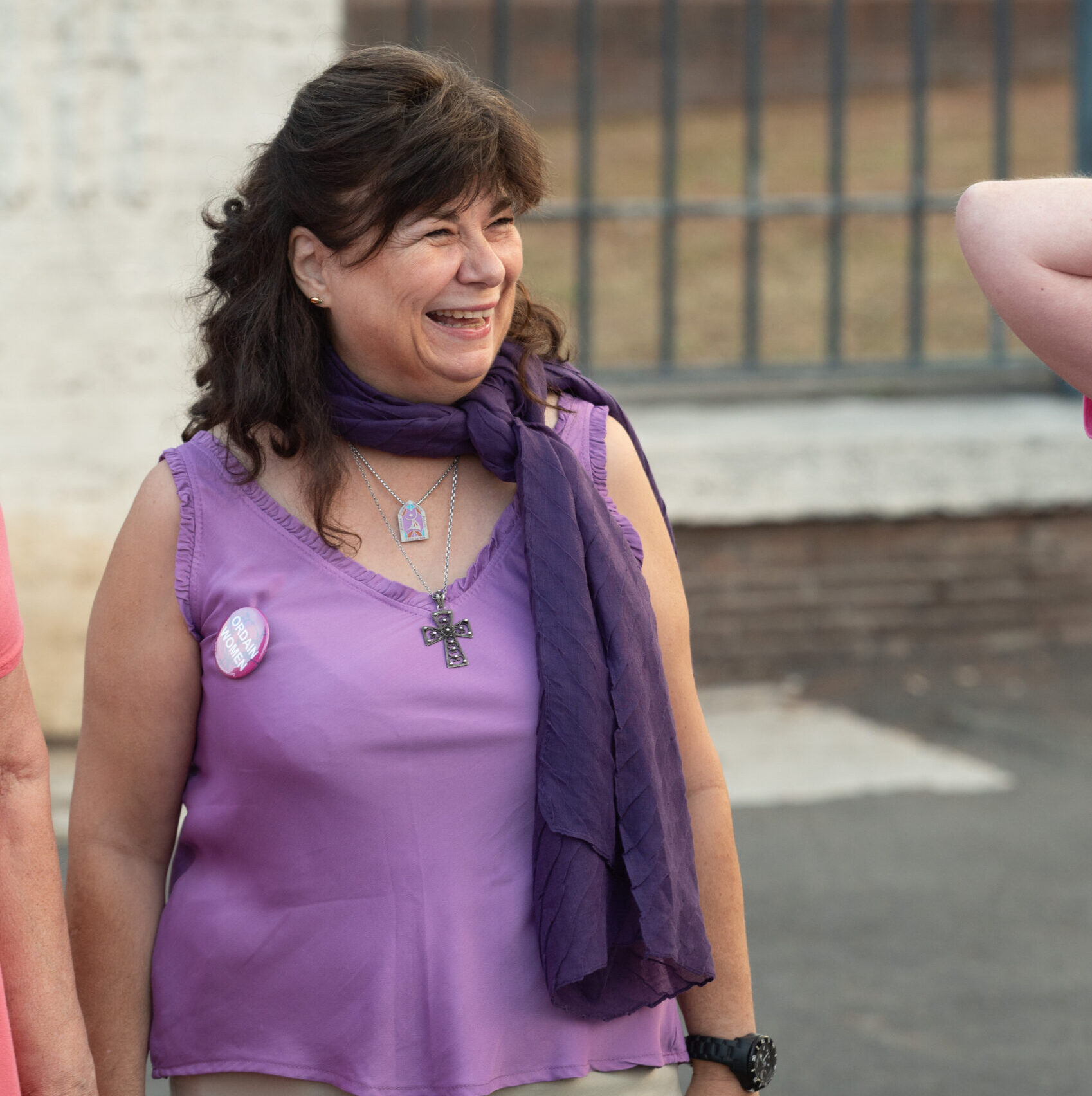
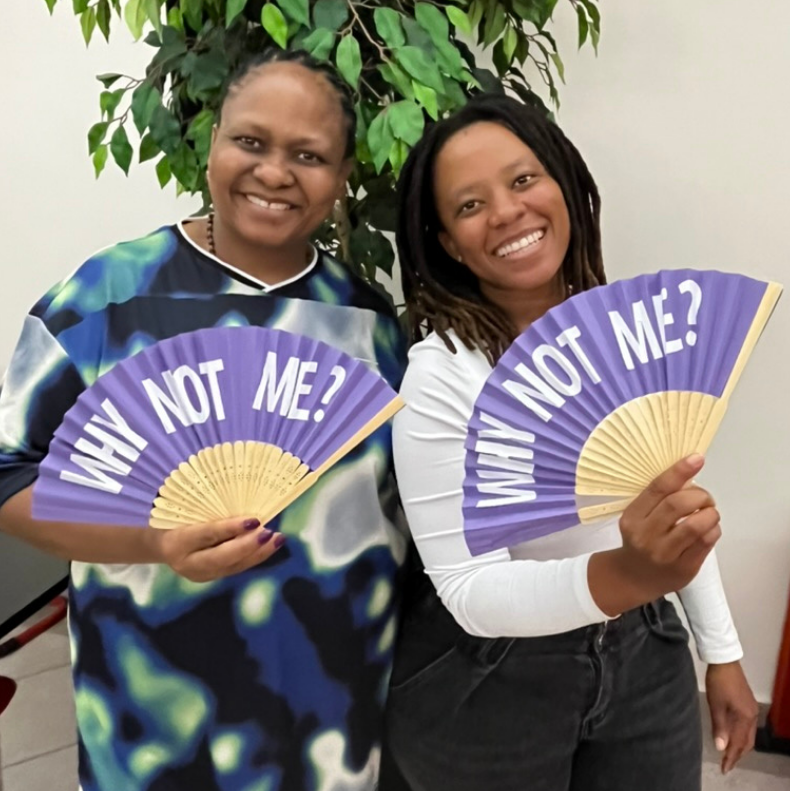
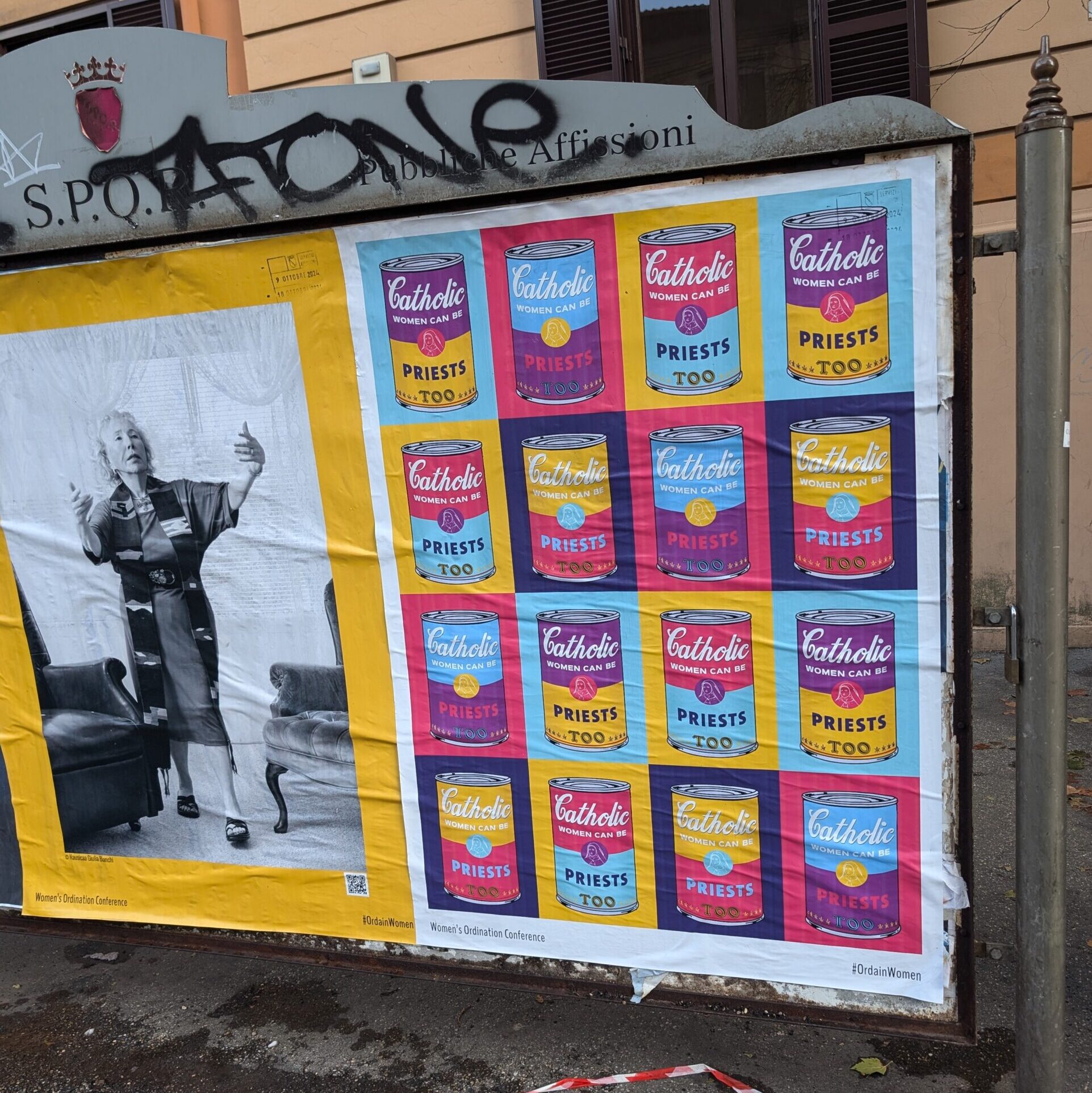
Jesus chose 12 men to be his apostles – setting the model for an all-male priesthood.
There is no clear evidence that Jesus intended the apostles to be priests. There were many women who were followers of Jesus and partners in ministry. Some argue that the priesthood was conferred upon the apostles at the last supper. But the Last Supper, as a traditional Passover meal, likely involved more than the twelve.
Bible, liturgy concur: women were there (NCR)The all-male priesthood is an unbroken tradition of the church. Women have never been ordained before.
In the early Church, when believers gathered in house churches, women exercised ministerial leadership. Paul’s letters refer to at least eight of these women, including Phoebe of Cenchreae, identified as a deacon, Prisca, and Junia.
In the underground Church of Czechoslovakia in the mid-twentieth century, several women were ordained. Ludmilla Javorová is considered the first of these women and was ordained December 28, 1970.
The ban on women’s ordination is an infallible teaching of the church.
There are two ways that a Church teaching is considered infallible:
1. Papal infallibility: If the Pope declares, ex cathedra (that is, formally in his role as successor of Peter), that a matter regarding faith and morals is to be definitively held as infallible.
2. Infallibility of the “ordinary and universal magisterium”: A teaching may also be considered infallible if the bishops of the world — in communion with the pope — are in universal agreement that a particular teaching is to be definitively held.
The document Ordinatio Sacerdotalis, promulgated by Pope John Paul II in 1994, does not fall under the scope of the first definition of infallibility – he did not proclaim the teaching ex cathedra. Instead the Congregation for the Doctrine of the Faith (now DDF) claimed that the teaching falls under the second category. However, again, the teaching does not meet those criteria.
The priest must act in persona christi, and because Jesus was a man, only men can hold that role.
To act in persona Christi does not mean physically resembling the historical Jesus of Nazareth, but emulating Jesus the Christ, whose essential nature is not in his male anatomy but in his status as the eternal Logos of God and the second Person of the Trinity, the son of God and mediator for the Church on earth. There are other characteristics central to the identity of the historical Jesus, such as his being a circumcised Jew, that we do not require of priests.
In the words of St. Gregory Nazianzen, “What has not been assumed has not been saved.” If we believe that Jesus assumed only maleness, and not humanness, then only the maleness he assumed is saved – not women. If you won’t ordain women because they don’t resemble Jesus, stop baptizing them.
MYTH: Men and women are equal in dignity in the eyes of God, but have different, *complementary* roles.
The theology of complementarity has often been used to suggest that there are inherent, intrinsic differences between men and women — differences that too often are excuses to place women in a subordinate position. While we are all embodied, and sexual difference exists, it is impossible to know where “nature” ends and “nurture” begins, and how much of the “nurture” comes out of a society that has historically considered women to inferior to men.
Despite the “equal dignity” suggested by proponents of complementarity, the roles that are assigned to men and women still place men in roles of leadership and women in roles of nurturing and subservience, and do not account for men and women whose personalities and unique gifts do not align with these categories (let alone people whose gender or sexual identity is non-binary or fluid).
There is no “equal dignity” if women continue to be denied leadership and decision-making roles within the Church.
MYTH: Isn’t this a settled question? To suggest otherwise is against the Pope and the Church.
Being a part of the Catholic Church has never been about blind obedience. Many faithful Catholics have challenged the Church to change its ways, including on slavery, when our understanding of the moral value of certain ideas or practices has developed.
The Church also teaches that a person must ultimately follow her conscience, “where the voice of God echoes in [her] depths” (Gaudium et Spes, 16), even if it means disagreeing with Church teaching. Canon law 212 reminds us that the faithful have “the right and even at times the duty…to make their opinion known to the rest of the Christian faithful.”
The Church’s stance on many issues—including slavery, religious freedom, the salvation of non-Christians, and whether women are “misbegotten men” and “the gateway to the Devil”—has changed. In the words of John Henry Newman, “Doctrine develops!”
The reason some questions cannot be suppressed…
… do not go away–regardless how many people think they should–is because the human heart knows they must be asked or have yet to be clearly answered. When that question concerns the quality of the discipleship of half the Catholics in the world, it cries out for attention. And will continue to cry out until the church itself attends to it. Why? Because the model of Jesus with women demands it.
The Women’s Ordination Conference honors this question for all our sakes. Thanks to WOC, as church we are able to pursue the question together so that the Church may grow in “wisdom, age, and grace.”
— Sr. Joan Chittister and actor Martin Sheen (2015)
Additional Resources
These questions – and myths – are not new. There are many resources available to go deeper into the theology, scripture, or magesterial teaching. Let this be the beginning of your mythbusting!
The authority of “Ordinatio sacerdotalis”
Luke Hansen shares a summary of his thesis from the Pontifical Gregorian University in Rome, where he took up the question of the authority of Pope John Paul II’s apostolic letter, “Ordinatio sacerdotalis,” published in 1994.

Women’s Ordination Bibliography
We’ve started a bibliography for additional reading. Is there a book missing from this list? Let us know!