

Why ordain
women?
Here’s six simple reasons to share.
“What comes from the Holy Spirit cannot be stopped!”
Final Document of the Synod on Synodality, pgph 60
The church *needs* women — and the gifts, experiences, and vocations they bring.
Women comprise more than half of the 1.4 billion Catholics worldwide. In the words of the 2024 final document of the Synod on Synodality:
“Women make up the majority of churchgoers and are often the first witnesses to the faith in families. They are active in the life of small Christian communities and parishes. They run schools, hospitals and shelters. They lead initiatives for reconciliation and promoting human dignity and social justice” (60).
In a rich variety of ways, women are already doing priestly and diaconal work around the world in everything but name and recognition. The church is impoverished when it cannot receive the full gifts of half of the Body of Christ. Faithful Catholics around the world deserve to see women and nonbinary people presiding at the altar, serving in persona Christi, preaching from their life experiences, and offering their pastoral presence in the sacraments.
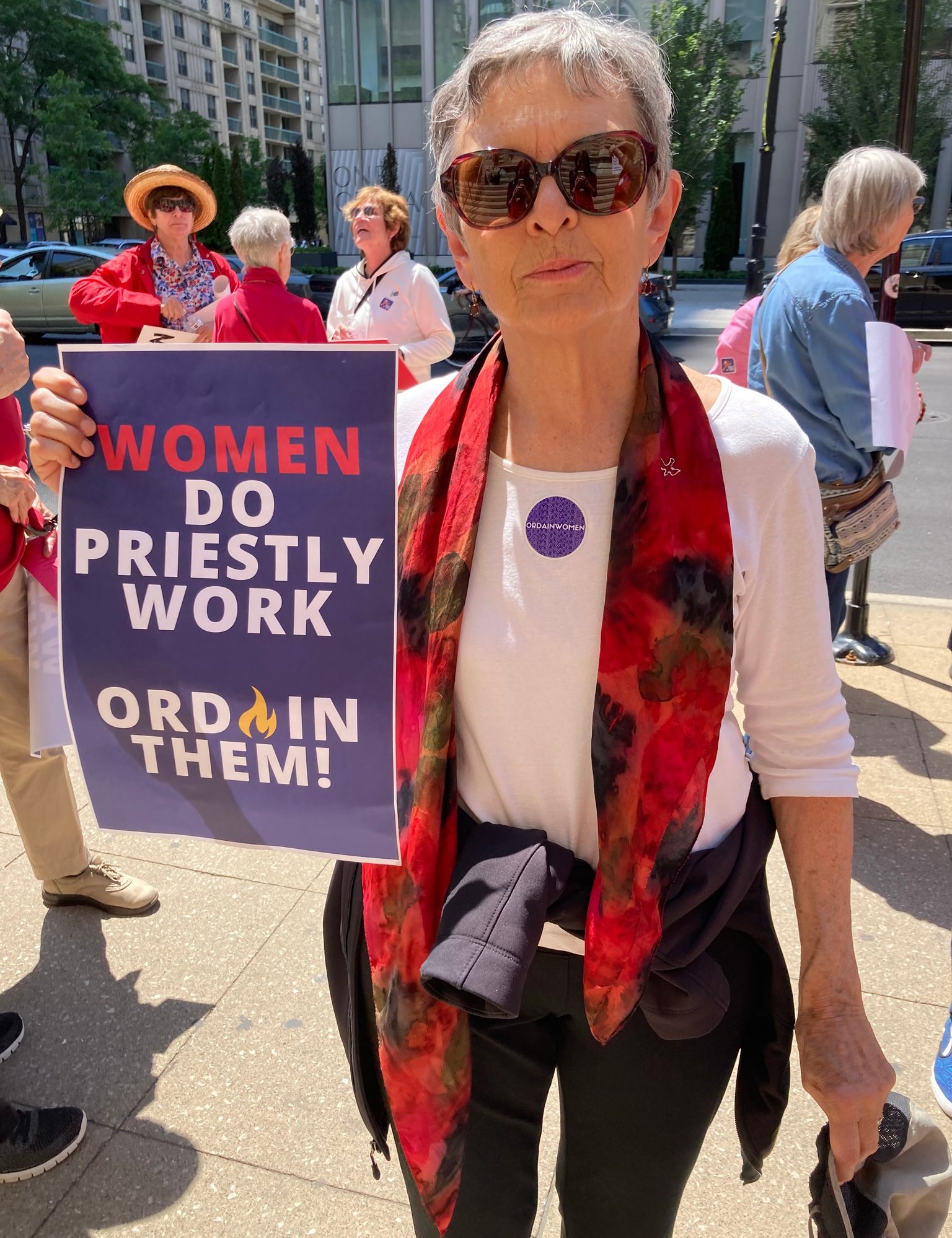
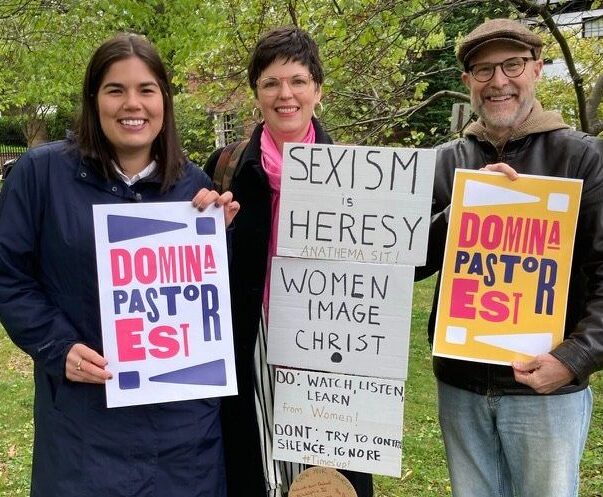
God calls women, and nonbinary people, to be deacons and priests.
Quite simply: God does not limit God’s call on the basis of gender.
People of all genders can and do faithfully discern the Spirit’s call to ordained ministry. Too often those calls are dismissed as invalid, wishful thinking, or an attempt to seize greater power.
But through the thousands of stories WOC has collected from women and nonbinary people who experience a vocation to ordained ministry, we know that these calls are rooted in a deep sense of faithfulness, a desire to serve God’s people, and a longing to fully become the person God has made them to be. In categorically denying the truth of these calls, the church both causes irreperable harm to these people and suffers an immeasurable loss in the richness of their gifts.
Despite so many barriers, women and nonbinary people claim their vocations—and often live them out in creative ways in parish life, until they reach the “stained glass ceiling” that limits their full potential.
The Gospel—and the example of Jesus—demands it.
Women including Mary Magdalene, Suzanna, Salome, Mary of Bethany, and Mary the wife of Clopas played prominent roles in Jesus’ ministry. The unnamed Samaritan woman at the well evangelized and converted her village after encountering Jesus. Women accompanied Jesus during his travels, were the last to stay at the foot of the cross, and were the first to witness the Resurrection. Mary Magdalene is known as the “Apostle to the Apostles” for being the first to tell the apostles that Jesus had risen from the dead. Jesus modeled radical inclusivity of women, and at various crucial stages in his own development he gained insight and was prompted to action through encounters with women (Wjingaards Institute).
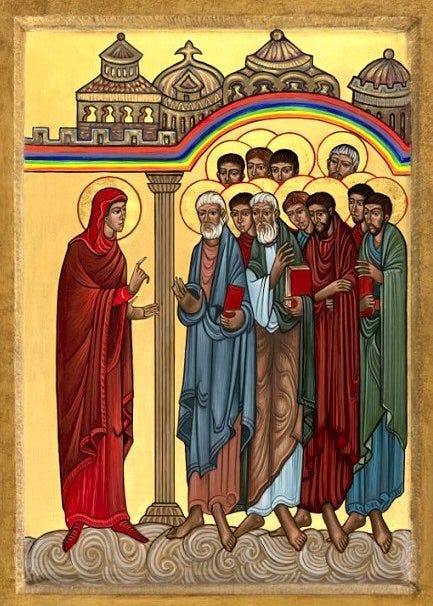
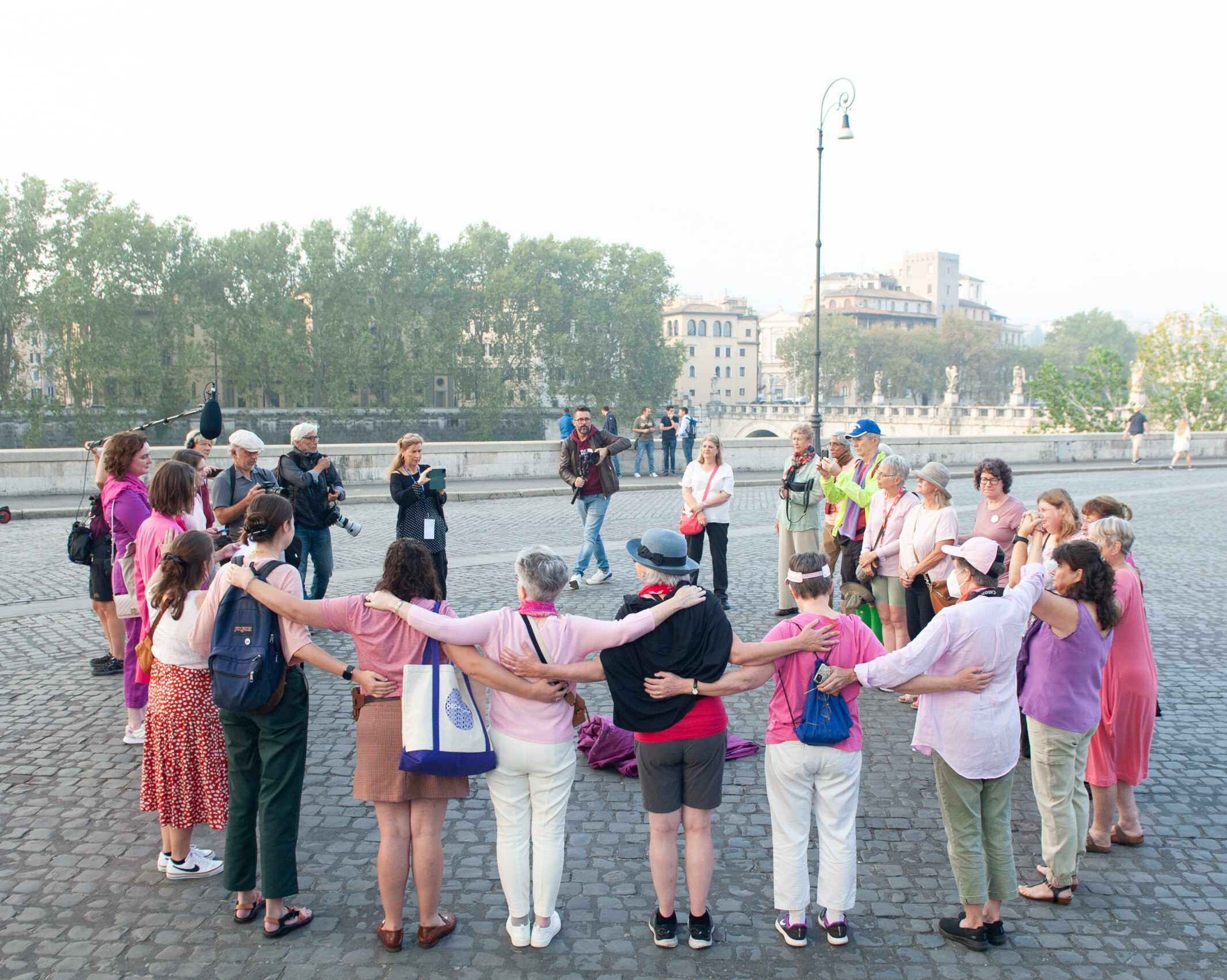
A truly synodal church demands it.
In 2021, the institutional church embarked on a journey of “synodality” through a global process of consultation and discernment about the needs and hopes of the church in the current moment of the world. In the words of the Synod itself:
“In simple and concise terms, synodality is a path of spiritual renewal and structural reform that enables the Church to be more participatory and missionary, so that it can walk with every man and woman, radiating the light of Christ.” (Final Document of the Synod on Synodality, 28)
And, “Synodality therefore invites the whole Church, including those who exercise authority, to conversion and reform.” (Final Document, 33)
Through the 2021-24 Synod on Synodality, the consultation with the worldwide church revealed urgent calls from around the globe for more leadership and participatory roles for women, including the diaconate and priesthood. In addition, the process of the Synod itself included women as voting delegates for the first time, sitting as equals alongside bishops and cardinals. The final document of the synod acknowledged the need for greater roles for women (though it fell short of recommending ordination as deacons or priests).
A truly synodal church would recognize the equality of its members. It would seek to heal wounds of marginalization, sexism, male clericalism, and to encourage full participation of women.
A truly synodal church cannot be fully achieved until women are trusted as ordained ministers. If, as the final document states, “There is no reason or impediment that should prevent women from carrying out leadership roles in the church: What comes from the Holy Spirit cannot be stopped” (60), then we must work as a church to remove all barriers to women’s ministerial leadership with urgency.
Vatican statements in support of women’s equality
The institutional church knows that women’s equality is a matter of Gospel justice—it just refuses to follow that to its logical conclusion: ordination of women.
“Women are gaining an increasing awareness of their natural dignity. Far from being content with a purely passive role or allowing themselves to be regarded as a kind of instrument, they are demanding both in domestic and in public life the rights and duties which belong to them as human persons.”
St. Pope John XXIII
Pacem in Terris, 1963
“There is, therefore, in Christ and in the Church no inequality on the basis of race or nationality, social condition or sex, because “there is neither Jew nor Greek: there is neither bond nor free: there is neither male nor female. For you are all ‘one’ in Christ Jesus”.(Gal. 3, 28; cf. Col. 3, 11.)”
Lumen Gentium
Dogmatic Constitution on the Church (32), Vatican II, 1964
“Inadequate consideration for the condition of women helps to create instability in the fabric of society. I think of the exploitation of women who are treated as objects, and of the many ways that a lack of respect is shown for their dignity; I also think —in a different context—of the mindset persisting in some cultures, where women are still firmly subordinated to the arbitrary decisions of men, with grave consequences for their personal dignity and for the exercise of their fundamental freedoms.
There can be no illusion of a secure peace until these forms of discrimination are also overcome, since they injure the personal dignity impressed by the Creator upon every human being.”
St. Pope Benedict XVI
World Day of Peace, 2007