

What about women deacons?
There’s a lot to say, but here’s the bottom line: Women have served as deacons since the church began, continue to minister in the tradition of deacons, and deserve to have their diaconal ministry officially recognized today.
The Vatican and Women Deacons
Watch a presentation by expert Dr. Phyllis Zagano, hosted by FutureChurch.
Watch the videoA list of named women deacons in church history
From the John Wijngaards Institute for Catholic Research.
READ MOREDiakonia and Determination
Hear the testimonies of women called to the diaconate in this prayer service from 2024.
Watch the recordingHistorical evidence of women deacons in the Catholic Church
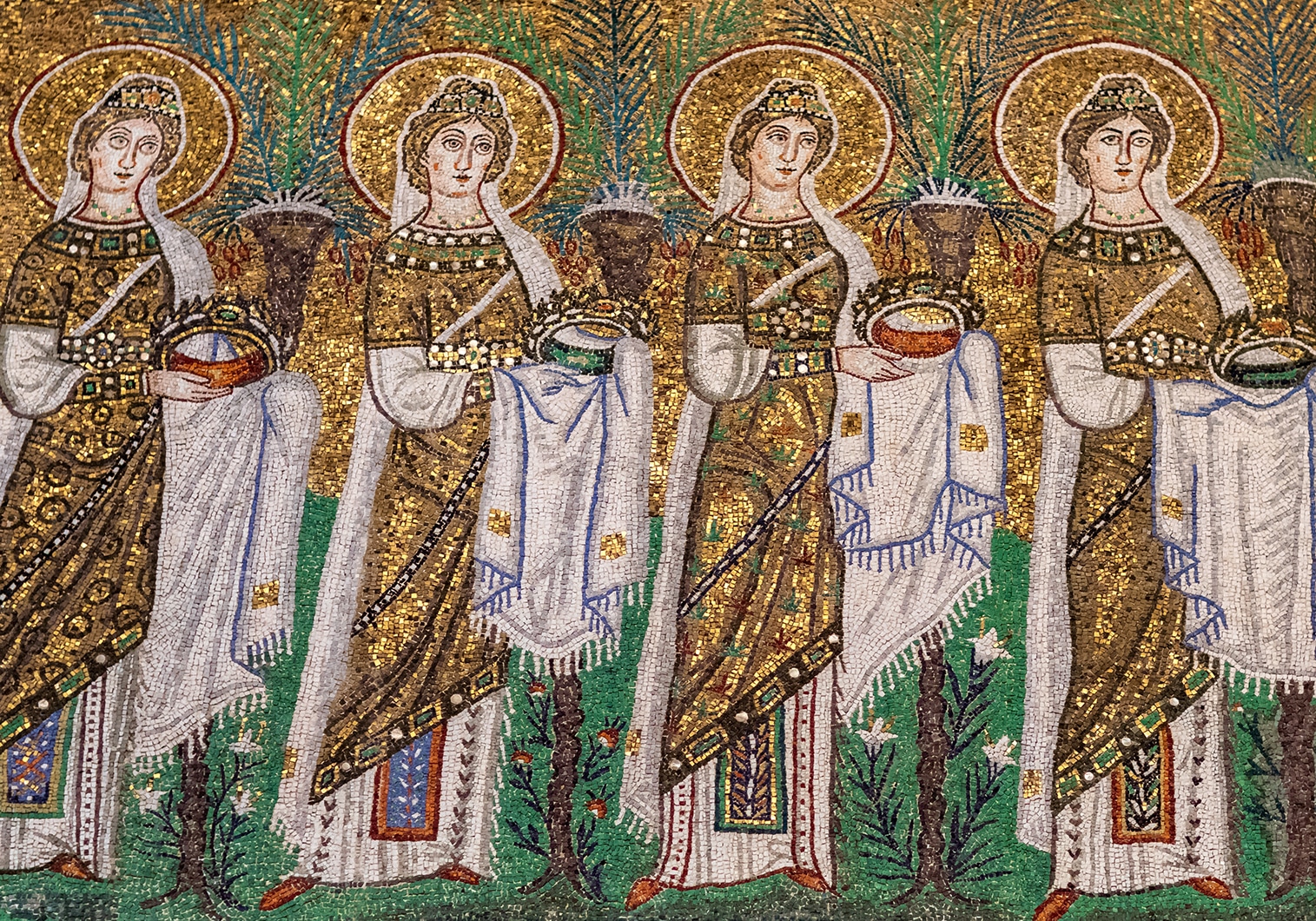
Ample evidence exists of the female diaconate in Christianity from about the 4th to the 12th centuries in the West, and until even later in the Eastern church. Early church writings, art, and ordination rituals reflect the reality that women were ordained as deacons.
Women in early church leadership
Biblical and historical evidence cites several women leaders working alongside men in the early Church, including: St. Olympias, Dionysia, St. Radegund, St. Macrina, and Phoebe, who is specifically mentioned as a deacon in the community at Cenchreae in the Apostle Paul’s letter to the Romans.
Ritual evidence
Written records show that rituals existed for bishops ordaining female deacons that included the liturgical elements of the laying on of hands, calling down the Holy Spirit (epiclesis), garbing with a stole, and being named a deacon—the same elements used in the ordination of male deacons.
From the 4th to the 12th centuries in the Western church, and longer in the Eastern, the ministry of women deacons is well documented. Ordained female deacons assisted with baptisms, anointing ill women, bringing the Eucharist to ill women, and in at least one case, examining the evidence for an annulment.
Art and architecture
There is extensive architectural and artistic evidence of women deaconsn and women in leadership from the early centuries of the church. The books Crispina and Her Sisters by Christine Schenk and Mary and Early Christian Women: Hidden Leadership by Ally Kateusz offer thoroughly documented examples.
A recent timeline on the *growing* conversation about women deacons
2016
Pope Francis establishes the first Study Commission on the Women’s Diaconate in response to a request from the International Union of Superiors General (UISG). The commission is given the task of examining the history of women serving as deacons in the Catholic Church. Dr. Phyllis Zagano was one of the original commission members.
Read about it in National Catholic Reporter2016-2019
The commission meets over the next three years, however their work and meetings are never made public.
In January 2019, they submit an initial report to Pope Francis that remains unseen by the general public. While not revealing details, Pope Francis stated that the commission had not reached a “definitive response” regarding the historicity of women serving as deacons.
Learn more2019-2020
During the 2019 Synod on the Amazon, the question of ordaining women as deacons arose repeatedly, though it was ultimately rejected in the final document from the synod. Instead, the document stated: “In the new contexts of evangelization and pastoral ministry in the Amazon, where the majority of Catholic communities are led by women, we ask that an instituted ministry of ‘women community leadership’ be created and recognized as part of meeting the changing demands of evangelization and care for communities” (102).
However, after the synod, Pope Francis created a second commission, made up of different members than the first, to continue the study of the women’s diaconate in the early church.
2023:
Synod on Synodality
Throughout the global consultation process for the Synod on Synodality (2021-24), the call for ordaining women to the diaconate rang out worldwide. The working document for the synod in 2023 stated:
“Most of the Continental Assemblies and the syntheses of several Episcopal Conferences call for the question of women’s inclusion in the diaconate to be considered. Is it possible to envisage this, and in what way?” (B 2.3.4)
In this way, the conversation about about women and the diaconate remained living and active among synod delegates, which included women as voting members for the first time, through the entire process.
2024: Pope Francis says “No,” informally
During a wide-ranging CBS television interview with journalist Norah O’Donnell aired on May 20, Pope Francis rejected the possibility of women serving as ordained deacons or as members of the clergy.
When asked by O’Donnell if a young Catholic girl ever would ever have the opportunity to be a deacon and participate as a clergy member of the church, Francis replied, “No.”
He went on to say, “If it is deacons with Holy Orders, no. But women have always had, I would say, the function of deaconesses without being deacons, right? Women are of great service as women, not as ministers…within the Holy Orders.”
2024: Synod on Synodality’s Final Document
At the close of the 2024 general assembly of the Synod on Synodality, the final document did not give a definitive answer on the possibility of ordaining women as deacons. Rather, it wrote in paragraph 60:
“This Assembly asks for full implementation of all the opportunities already provided for in Canon Law with
regard to the role of women, particularly in those places where they remain underutilised. There is no reason or impediment that should prevent women from carrying out leadership roles in the Church: what comes from the Holy Spirit cannot be stopped. Additionally, the question of
women’s access to diaconal ministry remains open. This discernment needs to continue.”
2025: Petrocchi Commission Report
In December 2025, the second commission studying the history of the women’s diaconate, informally known as the “Petrocchi Commission,” releases its final report.
In it, the group voted 7–1 against restoring women to the diaconate, urging that this position be “strongly maintained,” even as it called for yet more study. The report also reaffirmed the so-called “definitive judgment” against women’s priestly ordination.
2025-26: Pope Leo XIV
While Pope Leo’s comments on women in the diaconate during his pontificate have been limited, he did discuss it during an interview with Elise Ann Allen of Crux in 2025. He said:
“The topic becomes a hot-button issue when the specific question is asked about ordination. What the synod had spoken about specifically was the ordination, perhaps, of women deacons, which has been a question that’s been studied for many years now. There’ve been different commissions appointed by different popes to say, what can we do about this? I think that will continue to be an issue. I at the moment don’t have an intention of changing the teaching of the Church on the topic. I think there are some previous questions that have to be asked.”
Where does WOC stand on women deacons?
At WOC, we know that reinstating the diaconate for women is an important but incomplete step for women’s full equality in the Church. We also know that women are called by God and their communities to the diaconate, called to preach, and called to visible liturgical roles.
Women have been protagonists in the history of our faith since the time of the Gospels. We do not need to prove our sacramentality. The ability of our bodies to manifest revelation is not up for debate. And while we welcome study that leads to conversation and openness to where the Spirit is calling the Church, we will not wait for further evidence for what we already know: Women are called by God and their communities to be deacons and priests.
WOC believes that only when women are equally included in all ordination rites — as deacons, priests, and bishops — and at all Church decision-making tables, can we begin to restore our Gospel values of equality and justice.
More resources on women deacons
Must-Read Books on Women Deacons
A comprehensive list from the National Catholic Reporter.
Read the listWomen Deacons and the Catholic Church: An Explainer
A video overview by America Magazine (published in September 2024).
Watch the video“They Don’t Want to Say Yes” by Phyllis Zagano
An article on the state of the question of women deacons, in Commonweal Magazine, by scholar and former papal commission member Dr. Phyllis Zagano (published in July 2026).
Read the article“The Hidden History of Women’s Ordination” by Gary Macy
A presentation from Dr. Gary Macy at the Women’s Ordination Worldwide conference “Gender, Gospel, and Global Justice” in 2015.
Watch the video