

They can’t say “no,” they just don’t want to say “yes.”
— Dr. Phyllis Zagano on the heirarchy’s resistance to ordaining women deacons.
How did we get here? What does the Vatican actually say about women’s ordination to the priesthood?
And responses from advocates for women’s ordination.
Pontifical Biblical Commission, 1976
A Pontifical Biblical Commission, created by Pope Paul VI, was tasked with examining the role of women in Scripture as part of an effort to determine the role of women in Church leadership—in particular, whether they can be ordained as priests. It wrote:
“It does not seem that the New Testament by itself alone will permit us to settle in a clear way and once and for all the problem of the possible accession of women to the presbyterate.”


Inter Insignores, 1976
The Congregation for the Doctrine of the Faith releases Inter Insignores, the Declaration on the Question of Admission of Women to the Ministerial Priesthood, overturning the commission’s judgement, stating women do not image Jesus.
“The Church, in fidelity to the example of the Lord, does not consider herself authorized to admit women to priestly ordination” (5). The reasons listed include:
*Jesus chose twelve men as Apostles, who in turn chose men as successors.
*The central metaphor of Christ the bridegroom and the church as a bride, deeply rooted in scripture, requires that the priests who represent Christ be male.
*Because the priest acts in persona Christi, there is a need for priests to bear a “natural resemblance” to Christ, which must include his maleness.
WOC responds…
Jesus also chose women as his partners in ministry, including Mary Magdalene, whom he chose to be the first person he revealed himself to following the Resurrection. For this, she is known as the “Apostle to the Apostles.” In the Letter to the Romans, Paul also specifically mentions a woman named Junia as “prominent among the apostles” (Romans 16:7).
The metaphor of Christ as the bridegroom and the Church as a bride is only that: a metaphor. It no more requires the priests who represent Christ to be males than it requires the non-ordained members of the church to be comprised of only females. The metaphor points to the fidelity and love of Christ for the Church, which a person can represent and express in a priestly role regardless of their gender.
When a priest acts in persona Christi, it is in Christ’s role as mediator, not as as a human male. What is essential to Christ’s nature is his divinity and his humanness, not specifically his maleness. Therefore, male anatomy is not required or constitutive of the priesthood. We do not require priests to share other characteristics of the historical Jesus of Nazareth, such as his ethnic background.
Additional Resources
What the Spousal Metaphor Reveals and Conceals
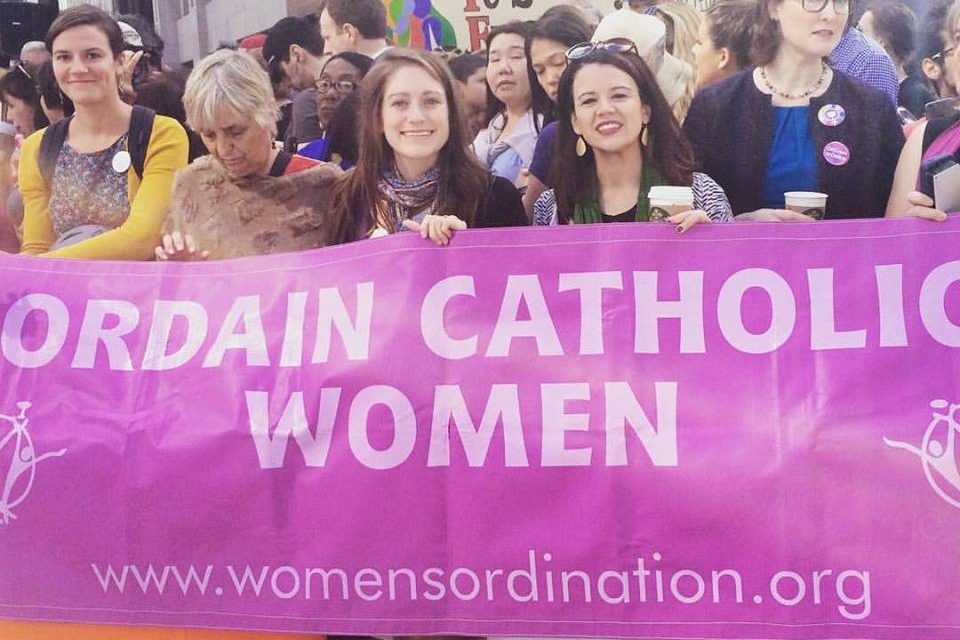
Key dates in women’s ordination history
A timeline compiled by the Natonal Catholic Reporter
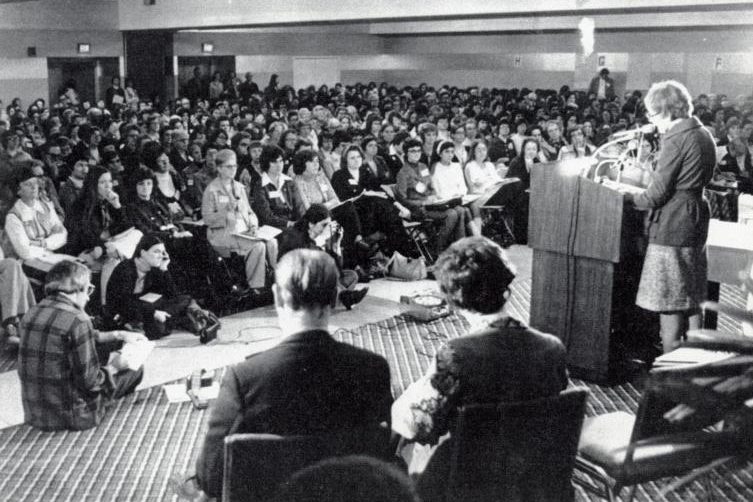
Moral Imperatives for the Ordination of Women
An essay delivered by Dr. Margaret Farley, RSM at the 1975 Women’s Ordination Conference. In 2020, she reaffirmed this work: “I stand by every word.:
Mulieris Dignitatem, 1988
Pope John Paul II’s apostolic letter on the dignity of women.
In it, he suggests that women play the role of “bride” to “Christ the bridegroom.” He also writes:
Since Christ, in instituting the Eucharist, linked it in such an explicit way to the priestly service of the Apostles, it is legitimate to conclude that he thereby wished to express the relationship between man and woman, between what is “feminine” and what is “masculine.” It is a relationship willed by God both in the mystery of creation and in the mystery of Redemption.
It is the Eucharist above all that expresses the redemptive act of Christ the Bridegroom towards the Church the Bride. This is clear and unambiguous when the sacramental ministry of the Eucharist, in which the priest acts “in persona Christi,” is performed by a man. This explanation confirms the teaching of the Declaration Inter Insignores” (26).
WOC responds…
The theology of complementarity has often been used to suggest that there are intrinsic differences between men and women—differences that too often are excuses to place women in a subordinate position. While people are all embodied, and sexual difference exists, it is impossible to know where “nature” ends and “nurture” begins, and how much of the “nurture” comes out of societies that have historically considered women inferior to men. Importantly, we now also know that sexual difference does not exist on a binary with “men” and “women” as the only categories.
There is no such thing as “separate but equal.” Despite the “equal dignity” suggested by proponents of complementarity, the roles that are assigned to men and women still place men in roles of leadership and women in roles of nurturing and subservience. Such roles do not account for men and women whose personalities do not align with these categories, let alone people whose gender or sexual identity is nonbinary or fluid. There is no “equal dignity” if women, trans, and nonbinary people continue to be denied leadership and decision-making roles, including ordained ministry, within the church.
Additional Resources

Defining Feminism: Can the church and the world agree on the role of women?
Theologian Cathleen Kaveny writes on the concept of complementarity in America Magazine.
Male and Female, God created them
Theologian Susan Ross writes about John Paul II’s theology of the body in U.S. Catholic.
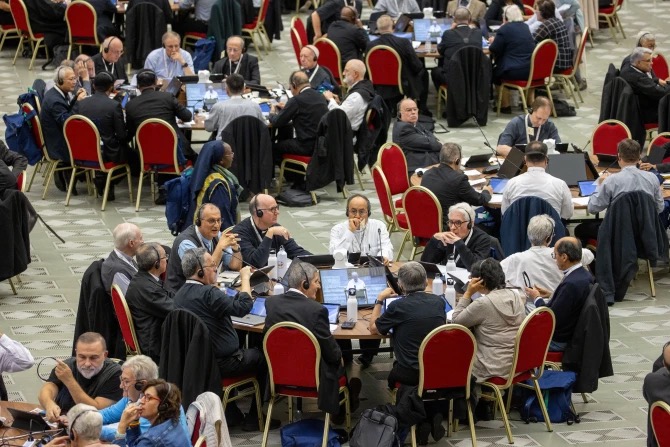
Beyond Complementarity
This “explainer” comes from FutureChurch: Complementarity Didn’t Begin with Jesus.
Ordinatio Sacerdotalis, 1994
Pope John Paul II promulgates the landmark apostolic letter Ordinatio Sacerdotalis, which says:
Although the teaching that priestly ordination is to be reserved to men alone has been preserved by the constant and universal Tradition of the church and firmly taught by the Magisterium in its more recent documents, at the present time in some places it is nonetheless considered still open to debate, or the Church’s judgment that women are not to be admitted to ordination is considered to have a merely disciplinary force.
Wherefore, in order that all doubt may be removed regarding a matter of great importance, a matter which pertains to the church’s divine constitution itself, in virtue of my ministry of confirming the brethren (cf. Lk 22:32) I declare that the Church has no authority whatsoever to confer priestly ordination on women and that this judgment is to be definitively held by all the Church’s faithful (4).
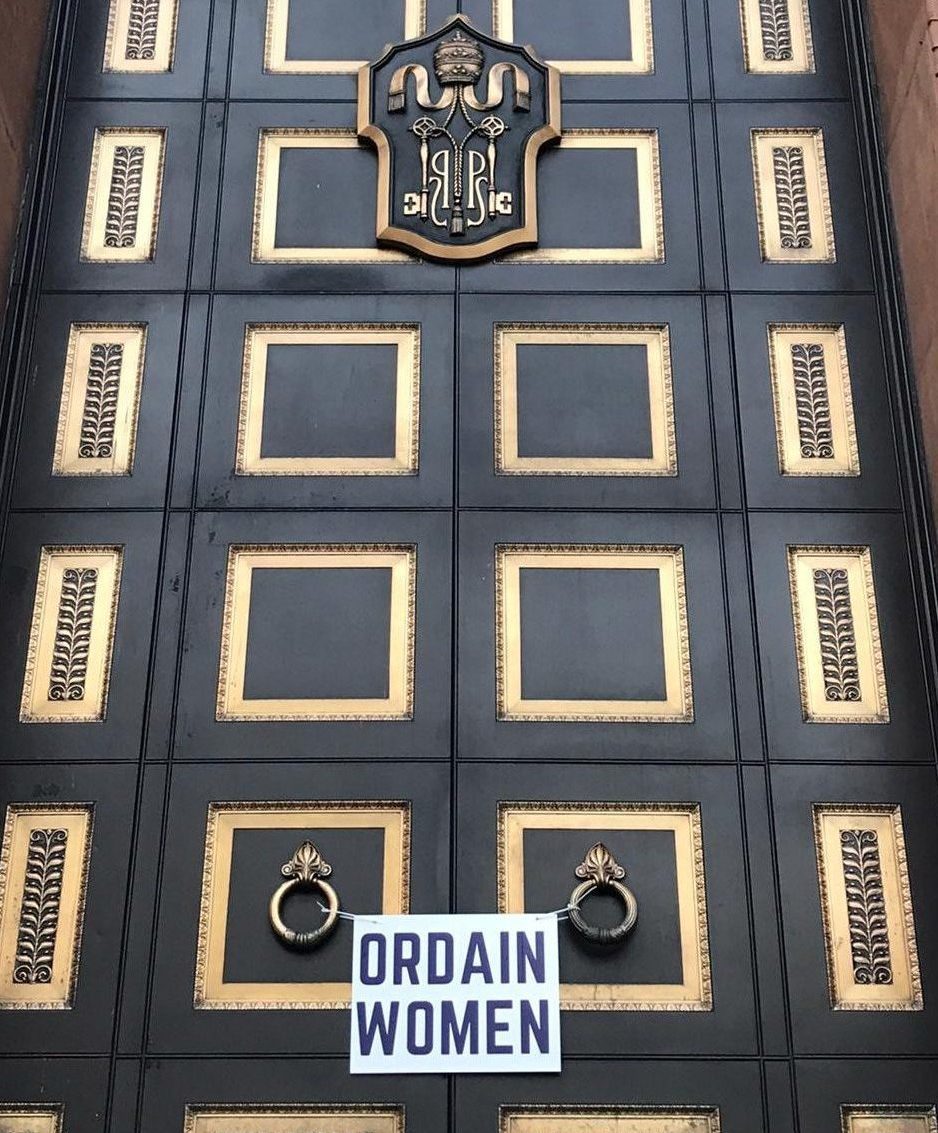
WOC responds…
Pope John Paul II’s statements in Ordinatio Sacerdotalis rely on a selective and somewhat misleading interpretation of church history and magisterial teaching.
Contrary to the document’s statement that an all-male priesthood has been the “constant and universal Tradition of the Church,” historical documentation shows that the concept of ordained ministry, including priesthood, shifted and changed through the early centuries of Christianity. During that early period, women held roles of ministerial leadership that involved laying on of hands and episcopal roles.
Far from being definitively held, the teaching in Ordinatio Sacerdotalis was challenged from a variety of corners, including a written challenge from the Catholic Theological Society of America (CTSA) endorsed by the organization in 1997. The CTSA pointed out that the most common reason given against women’s ordination in the church’s tradition is not Jesus’ choice of only men to be among the Twelve, but the supposed natural inferiority of women and their subjugation to to men in the social order—a reason that has lost all credibility.
Finally, as the theologian Luigi Gioia put it during a Catholic Women Speak symposium in 2018, “One of the surest ways to know the question is still open is that the Vatican keeps saying that it is closed.”
Responsum ad propositum dubium, 1995
Cardinal Joseph Ratzinger, then-Prefect of the Congregation for the Doctrine of the Faith, releases “Responsum ad propositum dubium,” a statement addressing certain doubts concerning the teaching contained in Ordinatio Sacerdotalis. This “response” was an attempt to silence robust theological objections to Ordinaio Sacredotolis by claiming it is “infallible by the ordinary universal magisterium.”
Read the textHowever, there are a series of conditions that must be met in order for a teaching to be considered “infallible by the ordinary universal magisterium.”
According to the Vatican II document on the church, Lumen Gentium:
…It must be an exercise of the collegial teaching authority of the bishops worldwide; it must involve a matter of faith or morals; and they must agree on one judgement that they assert must be held definitively (25). The world’s bishops have never created a statement or teaching asserting such a ban on women’s ordination and indeed, some bishops have openlly expressed a desire to see women ordained.
Canon Law
In addition, the Code of Canon Law (749 §3) states that a teaching that is infallible must be “manifestly evident.”
The dissent among the people of God about the ordination of women, and the global calls for women’s ordination throughout the 2021-2024 Synod on Synodality, shows that this is not so.
Sense of the faithful
Lumen Gentium also states: “The entire body of the faithful, anointed as they are by the Holy One, cannot err in matters of belief” (12). If the sense of the faithful is that God calls women to be priests, Lumen Gentium suggests that the Holy Spirit is guiding them in that belief.
Consistently held and applied tradition?
Hardly. In early Church history we see evidence, both archaeological and in writing, that women were in positions of ordained leadership. In addition, theologian Richard Gaillardetz reminds us that due to the strict censure of priests and others who even raise the issue of women’s ordination, there has never been an atmosphere of open conversation, theological study, and debate around the question that would lead us to believe that the worldwide college of bishops is in agreement on the matter.
Update to Canon Law, 2010
In an update to the substantive norms for “grave delicts” in the Code of Canon Law, Pope Benedict makes the “attempted sacred ordination of a woman” a crime on par with sexual abuse of a child, with a penalty of automatic excommunication. Pope Francis moved forward with these changes and updated the Code of Canon Law in 2021.
Learn moreThe idea that a woman seeking to spread the message of God and offer the sacraments somehow “defiles” the Eucharist reveals an antiquated, backwards Church that still views women as “unclean” and unholy.
There is no equivalence whatsoever between a priest who sexually abuses a minor, causing irreparable harm, and a woman who receives ordination in order to follow God’s call and offer her gifts to the people of God.
The Francis Papacy
A devastating departure from Francis’ pastoral and “listening” nature is his treatment of the question of women’s ordination to the priesthood. While there may be some progress to be tracked parsing slight shifts in language from year to year, he has remarkably stayed the course set by John Paul II.
The inadequacy of his responses have prompted journalists to ask nearly the same question in papal press conferences or interviews in 2013, 2015, 2016, 2018, 2020 and 2022.
When speaking briefly, Francis simply says, “The church has spoken and said, ‘No.’” When given more time, such as in a recent interview in 2022, he reveals a worrying confidence in the Marian and Petrine principles to explain the complexity of our relationship to God.
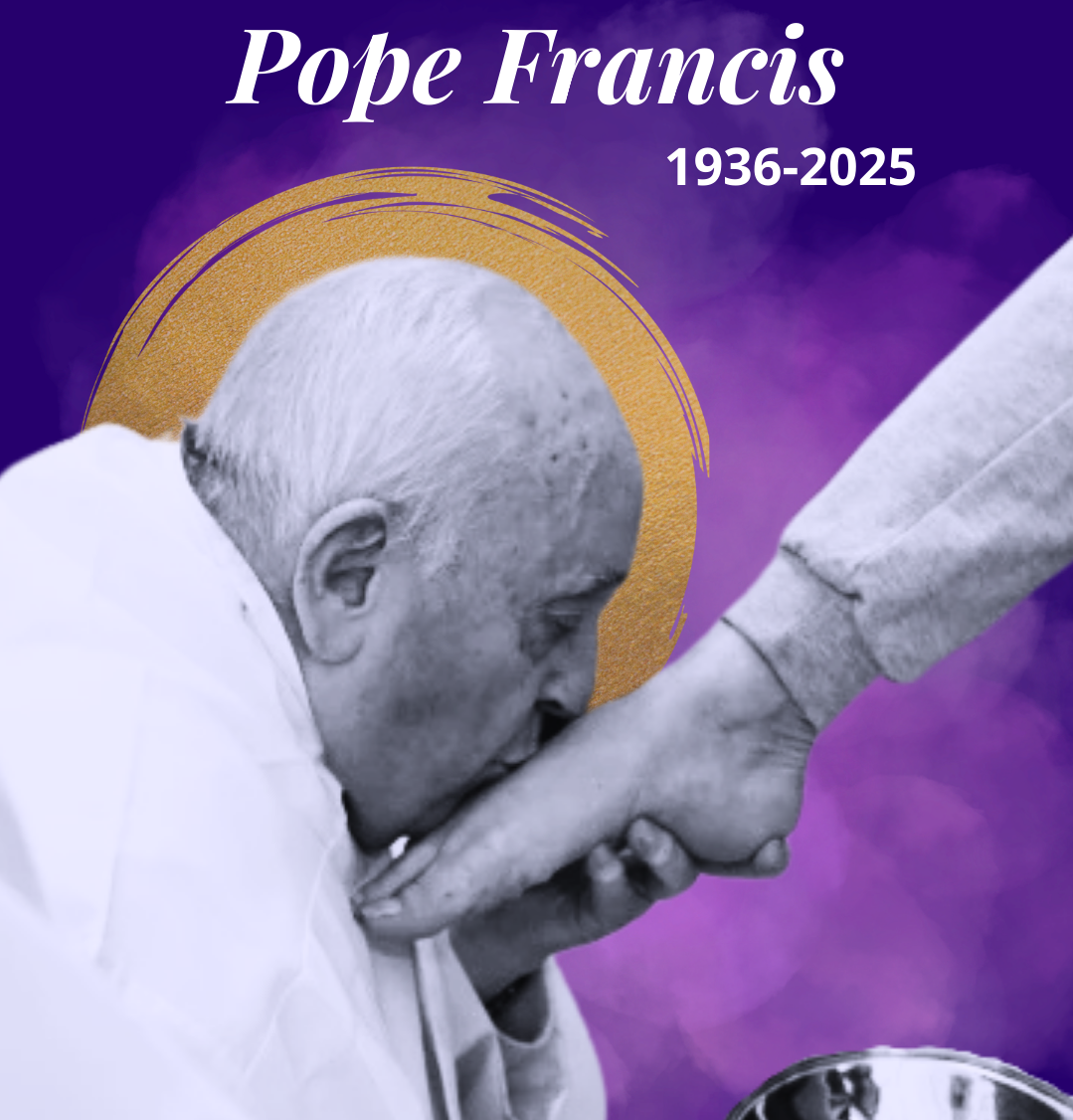
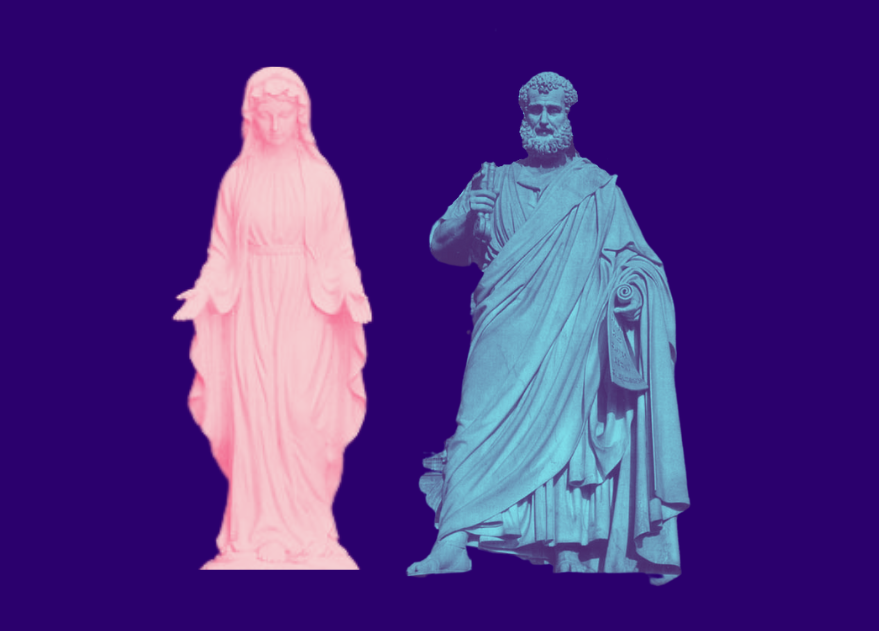
Pope Francis and the “Marian and Petrine Principle”
In an interview with America magazine, Pope Francis reiterated that women cannot be ordained as priests, offering a dense theological explanation relying on the “Marian” and “Petrine” principles of the church.
Read the interviewRead WOC’s responseFrancis’ suggestion that “woman is more, she looks more like the church, which is mother and spouse,” relies on a literal interpretation of the “spousal metaphor,” that reduces the extravagance of one’s relationship with God and discipleship to plastic figurines on a wedding cake. Not just a disservice to the Catholic imagination, this literalism becomes a tool of oppression. The call to priesthood comes from God, not from one’s body parts.
The pope’s meandering defense is unsatisfying to anyone paying attention to the movements of the church today. Francis’ lack of understanding of women’s ministerial gifts stands in jarring contrast with synod reports from around the world, which reflect a collective longing for women in ministry.
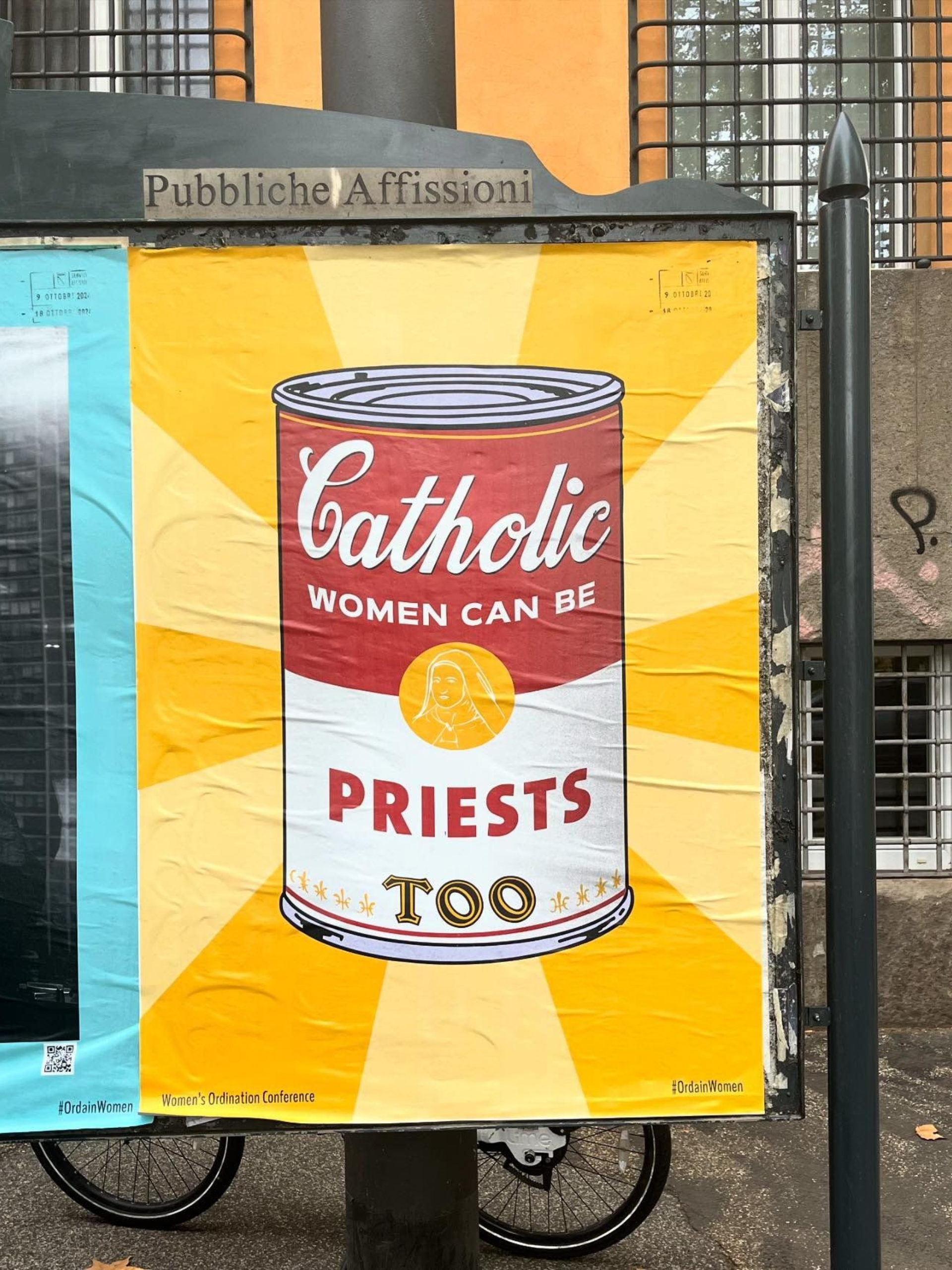
More recently…
During the October 2, 2024 opening session of Pope Francis’ month-long Synod on Synodality—anticipated to take up important issues facing the church today—the Vatican preemptively and blatantly undermined their own process by dismissing the call for women deacons as not yet “mature” with “no room for a positive decision.”
The equivocation took place in written remarks from the Vatican’s head of doctrine, Cardinal Victor Manuel Fernandez, as he summarized the “working group” on ministry, echoing other synod officials who have insisted women’s ordination is not on the agenda.
At the time, WOC decried this hollow performance of “synodality,” as inconsistent with the synodal promise of inclusivity, and a betrayal to Catholics worldwide who believed they were engaging in a sincere process of renewal of church structures.
However, the question of women’s ordination did not go away. While the Vatican and subsequent Papal Commissions have said the question of women deacons needs further study, many feel this is simply patriarchal stalling tactics. The implementation of the Synod on Synodality continues to unfold, and many look to Paragraph 60 of the Final Document of the 2024 Synod (that was made magesterial teaching by Pope Francis) as a pathway toward equality.
Paragraph 60: “What comes from the Holy Spirit cannot be stopped.”
This Assembly asks for full implementation of all the opportunities already provided for in Canon Law with regard to the role of women, particularly in those places where they remain underutilised. There is no reason or impediment that should prevent women from carrying out leadership roles in the Church: what comes from the Holy Spirit cannot be stopped.
Additionally, the question of women’s access to diaconal ministry remains open. This discernment needs to continue.